14 Bears Near Bozeman Were Put Down After Human Feeding: A Sobering Reminder About Feeding Montana Wildlife
Montana is known for its incredible wildlife.
From the mountains surrounding Bozeman to the forests, rivers, and open country that stretch across the state, seeing wildlife is one of the things that makes Montana such a special place. Bears, in particular, are an important part of Montana’s wild landscape.
But a recent situation near Bozeman is a heartbreaking reminder that getting too close to wildlife—or intentionally providing it with food—can have devastating consequences.
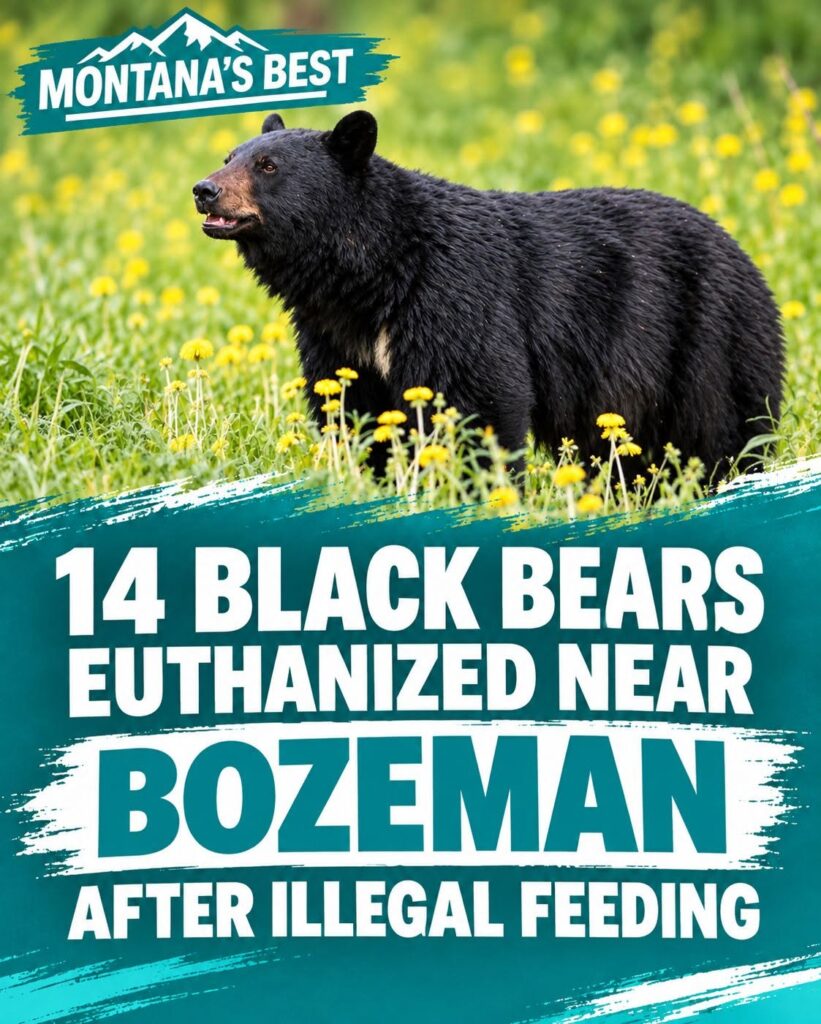
According to Montana Fish, Wildlife & Parks, 14 black bears were captured and humanely euthanized after investigators found the bears had become extremely food-conditioned and habituated to humans at a property north of Bozeman.
The situation was discovered on September 24 and 25, 2026, after FWP responded to a report involving the supplemental feeding of wild black bears.
One cub was taken to the Montana WILD facility in Helena for possible placement at an accredited zoo.
Fourteen bears, however, could not simply be relocated.
And that is what makes this story so important.
What Does It Mean When a Bear Becomes Food-Conditioned?
A wild bear is supposed to know how to find food in the wild.
That means berries, vegetation, insects, fish, carrion, and other natural food sources depending on the season and the bear’s environment.
However, when bears repeatedly discover that people or properties provide an easy source of food, their behavior can change.
Instead of avoiding people, they may begin approaching homes.
Instead of being cautious around buildings, vehicles, or people, they may start associating those things with food.
Eventually, a bear can become less afraid of humans and more willing to take risks to get another meal.
That is what wildlife officials mean when they talk about a bear being “food-conditioned.”
And once that behavior becomes deeply established, fixing it can be extremely difficult.
These Bears Were No Longer Acting Like Typical Wild Bears
According to FWP, the bears found near Bozeman were extremely food-conditioned and habituated to humans.
That distinction is important.
This wasn’t simply a situation where a bear happened to wander through someone’s yard looking for a snack.
Wildlife officials said the bears were unafraid of people and had stopped relying on natural foods.
Because of that behavior, officials determined that the bears represented a serious human safety risk.
FWP Capt. Josh Leonard said the bears’ behavior created a human safety concern and described the euthanization as very unfortunate.
That is a difficult reality to think about.
These were wild animals doing exactly what they had learned to do.
They learned where food was available.
They learned that humans were not something they needed to fear.
They learned that a particular location could provide an easy meal.
And eventually, that behavior put both the bears and people in a dangerous situation.
Why Couldn’t the Bears Simply Be Relocated?
This is one of the first questions many people may have.
If a bear becomes a problem near Bozeman, why not simply take it somewhere else?
Unfortunately, relocation is not always a solution for a food-conditioned bear.
A bear that has learned to seek food from humans may continue looking for that same type of food source after being moved.
It may also have little reason to avoid people in its new location.
In other words, moving the bear doesn’t necessarily change the behavior that created the problem in the first place.
FWP stated that this type of behavior cannot simply be corrected through rehabilitation or relocation when bears have become heavily food-conditioned.
That leaves wildlife officials with an incredibly difficult decision when the animal presents a serious safety threat.
This Is Why Feeding Wildlife Can Be So Dangerous
Sometimes people feed wildlife because they love animals.
They may believe they are helping.
They may enjoy watching bears from a window or property.
They may put food outside because they want to attract wildlife for photographs.
And they may never imagine that something as simple as putting food outside could eventually contribute to an animal being killed.
But wildlife doesn’t understand our intentions.
A bear doesn’t know that someone put out food because they care about bears.
It simply learns:
This is where I can find food.
If that lesson is repeated often enough, the bear may come back.
Then it may come back more frequently.
Then it may become comfortable around people.
Then it may begin entering areas where people live.
That progression can happen gradually, which is one reason the consequences may not be obvious at first.
Feeding a Bear Doesn’t Make It Your Friend
One of the biggest misconceptions about wildlife is that animals can become comfortable around humans without consequences.
Unfortunately, comfort around people can be dangerous for a wild animal.
A bear that keeps its distance is generally behaving like a wild bear.
A bear that approaches a home because it expects food is behaving differently.
That doesn’t mean the bear is “bad.”
It means the bear has learned a behavior that can put it in conflict with humans.
And when a large wild animal loses its natural fear of people, the consequences can become serious very quickly.
Montana Law Prohibits Feeding Bears
There is also a legal side to this situation.
Montana law prohibits providing supplemental feed to game animals, including bears. FWP cited Montana Code Annotated 87-6-216 in discussing the incident.
According to reporting by the Daily Montanan, a person convicted of violating the statute may face a fine of up to $1,000, imprisonment for up to six months, or both, along with potential loss of hunting, fishing, or trapping privileges.
However, the most important consequence in situations like this isn’t necessarily a fine.
It can be what happens to the wildlife afterward.
In this case, 14 bears lost their lives.
The Investigation Is Still Ongoing
It is important not to jump to conclusions about exactly what happened.
FWP said its investigation into why the bears were on the property is ongoing.
That means the public should be careful about assigning blame or making assumptions about the individuals involved until investigators have completed their work.
What is already known is that wildlife officials found a large group of bears that had become heavily food-conditioned and habituated to humans.
That alone should be enough to start an important conversation about wildlife responsibility in Montana.
There Was One Bear That May Get a Different Ending
There is also a small piece of hope in this otherwise difficult story.
One cub was taken to Montana WILD in Helena for possible placement at an accredited zoo.
Zoo placement for wild bears is extremely limited, however, and isn’t an option for every animal.
Still, the fact that one cub may have another opportunity shows why early intervention matters.
The sooner wildlife conflicts are reported and addressed, the more options officials may have.
Once a bear becomes deeply accustomed to receiving food from humans, those options can disappear.
What Montana Residents Can Do to Help Bears Stay Wild
The best way to prevent a story like this from happening again is to prevent bears from becoming food-conditioned in the first place.
That means never intentionally feeding a bear.
But it also means paying attention to the food and attractants around your property.
Garbage can be a major attractant.
So can bird feeders, pet food, barbecue grills, coolers, and other sources of food.
If bears are able to repeatedly access those items, they can quickly learn that residential areas provide an easy meal.
Montana FWP recommends keeping garbage, bird feeders, pet food, and other attractants secured.
Bear-resistant garbage containers can also help reduce the opportunity for bears to find food around homes and businesses.
If You See a Bear Getting Into Food, Report It
Another important lesson from this situation is that early reporting matters.
If you see a bear getting into garbage or attempting to access food around a home, vehicle, or business, don’t assume someone else will deal with it.
Contact Montana Fish, Wildlife & Parks.
The earlier a problem is identified, the greater the possibility that wildlife professionals can intervene before the animal’s behavior becomes deeply established.
That can make a tremendous difference.
A bear that is still wary of people may be manageable.
A bear that has repeatedly been rewarded for approaching people is a much different situation.
Montana’s Wildlife Is Worth Protecting
Montana doesn’t have to choose between having thriving wildlife and having safe communities.
The two can exist together.
But it requires people to understand that wild animals need to remain wild.
That means enjoying bears from a safe distance.
It means taking photographs without trying to attract them.
It means securing garbage.
It means keeping pet food indoors.
It means taking bird feeders down when necessary.
And, perhaps most importantly, it means resisting the temptation to feed wildlife—even when it seems harmless.
Because what looks like kindness in the moment can sometimes create a dangerous situation that nobody intended.
The 14 bears near Bozeman are a painful example of that.
They didn’t choose to become dependent on human food.
They didn’t choose to lose their natural fear of people.
They simply learned where food was available.
And once that behavior became severe enough to create a human safety risk, wildlife officials determined there was no safe alternative for those animals.
A Lesson We Shouldn’t Forget
Montana’s wildlife is one of the greatest treasures of this state.
Seeing a bear in the wild can be an unforgettable experience. But the goal should always be to see that bear behaving like a bear—not waiting for a handout, walking toward a house, digging through garbage, or approaching people because it has learned that humans mean food.
The story of these 14 bears near Bozeman is heartbreaking.
However, perhaps the most meaningful thing we can do with a story like this is learn from it.
Don’t feed wildlife.
Secure attractants.
Give bears plenty of space.
And report problems before they become dangerous.
Because protecting Montana’s bears isn’t just about protecting bears.
It’s about protecting people, protecting communities, and making sure future generations can experience the same wild Montana that makes this state so special.
Montana is bear country. Let’s do our part to keep it that way.